The inspector kneels at the crawl space entrance with a flashlight in one hand and a moisture meter in the other. Two hours later the report lands in an inbox, and in a huge share of Medford homes built any time before the mid-1990s, the flagged items are not what most buyers expected to read. They braced for radon. They braced for old wiring. What they usually get instead is a note about a door that sticks in the hallway, a hairline crack near a window corner, and a recommendation to check the grading along the north side of the foundation.
That gap between what people worry about walking in and what the report actually says is the thing worth understanding before you write an offer or accept one in Medford right now.
The Line Item That Keeps Showing Up
Southern Oregon sits on clay-heavy soil, and clay does something most buyers never think to ask about: it swells when it gets wet and shrinks when it dries out. Medford's wet winters and long dry summers put that cycle on repeat, year after year, and the ground underneath a house is never quite the same shape twice.
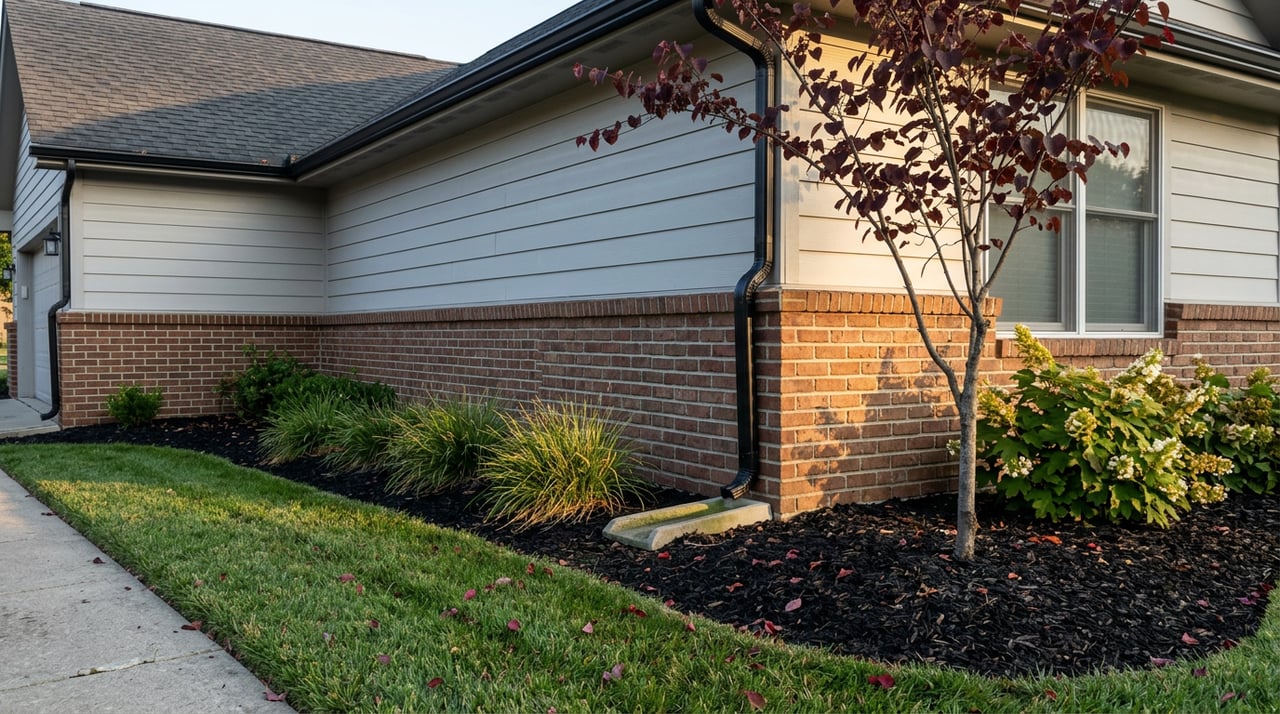
Frank Millett, who has run a foundation repair business in Medford since 1973, calls water the source of most of the foundation damage his crew sees in the area. When drainage around a house isn't doing its job, the soil nearby gets saturated, swells, and presses against the foundation wall. When it dries back out, it pulls away and leaves a gap the footing eventually settles into. His team treats consistently wet soil near the foundation, efflorescence on concrete walls, and unusually dry soil right after a rain as the early tells of a drainage problem, not a structural one.
TerraFirma, another foundation and crawlspace repair company working in Medford, sees the same cycle show up as a familiar short list of symptoms: sticking doors, windows that won't close properly, and gaps opening between walls and ceilings, all pointing back to soil movement rather than a failing foundation.
That distinction matters more than almost anything else in this conversation. A drainage issue and a structural foundation failure produce some of the same symptoms on paper, but they are not the same repair, and they are not the same number.
What Most Buyers Bring to the Table Instead
Ask a buyer moving to Medford from out of state what they're worried about finding on an inspection, and radon comes up constantly. It's a reasonable instinct. National coverage of radon as a health risk is everywhere, and nobody wants to buy a problem they can't see or smell.
Here's the part the national coverage skips: risk varies enormously by geography, and Jackson County sits in the lowest of the EPA's three radon risk tiers. The agency's zone system runs from Zone 1 (highest potential) to Zone 3 (lowest), and Jackson County is classified Zone 3, with a predicted average indoor screening level under 2 picocuries per liter. Twenty-one Oregon counties carry the moderate Zone 2 designation. Jackson isn't one of them.
That doesn't mean skip the test. The Oregon Health Authority is clear that results can vary house to house even within a low-risk zone, and the only way to know your specific address is to test it. But it does mean the line item most first-time Medford buyers spend their emotional energy on isn't the one their inspector is statistically most likely to write up. The soil is.
Here's how the two compare when they actually show up in a transaction:
| What buyers expect to worry about | What typically shows up in a Medford report |
|---|---|
| Radon levels | Jackson County is EPA Zone 3, the lowest risk tier Oregon assigns, though every home should still be tested |
| Outdated wiring as a fire hazard | A real concern in homes built before the 1990s, and worth its own line item on the inspection |
| A cracked foundation meaning a bad house | Usually a drainage and grading issue tied to clay soil, addressed with regrading or a targeted repair, not a full rebuild |
The Retrofit Nobody Budgets For Until It Comes Up
There's a second pattern in Medford's older housing stock that rarely gets discussed until refinance time or an insurance renewal: seismic retrofitting. Oregon strengthened its seismic building code in the early 1990s, which means homes built before then commonly went up without two things inspectors now look for as baseline protection: anchor bolts securing the mudsill to the foundation, and bracing in the cripple walls, the short stud walls between the foundation and the first floor framing.
Neither of those is usually a deal breaker in a purchase agreement. But it's the kind of detail that changes what a buyer should ask for when negotiating, and what a seller should expect if their home dates to the Craftsman and mid-century era that fills in a lot of Medford's older neighborhoods. It's also worth knowing before you shop for homeowners insurance, since retrofit status can factor into coverage terms.
What This Actually Means If You're Under Contract Right Now
If you're a seller and your report comes back with language about foundation movement, don't treat it as a death sentence for the deal before you've had a second opinion. Ask whether the recommendation points to drainage and grading work, which is often a modest fix, or to structural settlement that needs piers or stabilization, which is a bigger conversation. Local firms like Millett Construction and TerraFirma will typically walk the crawl space themselves and give a fixed-cost proposal rather than a phone estimate, and that proposal is what you want in hand before you decide whether to fix it, credit it, or hold your price.
If you're a buyer, the practical move is to ask your inspector directly what they're seeing along the foundation perimeter and what the drainage looks like after the last rain, not just whether there's a crack. Inspectors serving Medford and the surrounding Rogue Valley, including HouseMaster Southern Oregon and National Property Inspections under Jason Wileman, walk this exact terrain daily and can usually tell you on the spot whether something is cosmetic, monitorable, or worth a second opinion from a foundation specialist before you finalize your offer.
On the radon side, a standard short-term test during your inspection period typically runs $150 to $250. If a result does come back elevated, mitigation companies working in Jackson County generally quote $800 to $2,000, with most standard slab homes landing in the $1,000 to $1,500 range for a sub-slab depressurization system. Given the county's Zone 3 classification, that's a possibility worth planning for, not a certainty worth losing sleep over.
A Few Straight Answers
Does a foundation crack mean the sale is off? Not usually. Most of what shows up in Medford inspection reports traces back to drainage and the seasonal swelling of clay soil rather than a structural failure. The next step is a specialist walkthrough and a fixed-cost proposal, not an automatic walk away.
Is radon testing required before closing in Oregon? No. Oregon does not mandate radon testing as part of a standard home sale, so it's up to the buyer to request it during the inspection period if they want it included.
Should I skip radon testing since Jackson County is low risk? No. Zone 3 means the county average is lower, but individual results still vary by address. Testing is inexpensive relative to what it rules out, and it's the only way to know your specific home.
Every Medford transaction carries its own mix of soil, age, and history, and a report full of unfamiliar terms can feel bigger than it is until someone walks you through what each line actually means for your price or your timeline. That's the conversation worth having before you sign anything, not after.
If you're weighing an offer, a listing, or just want a clearer read on what a specific Medford property's age and location might mean for your inspection, Rachel White can walk through it with you. Get your instant home valuation and start the conversation on your terms.