Looking for a home in Medford that offers less exterior upkeep and a lower entry price than many detached houses? Condo and townhome living can be a smart fit if you want a simpler ownership style, a manageable footprint, or a place that supports your next chapter. In Medford, this part of the market is relatively small and moves quickly, so it helps to understand how these homes differ, what costs to expect, and what to review before you buy. Let’s dive in.
Medford attached-home market at a glance
If you are searching for condos or townhomes in Medford, you are shopping in a smaller segment of the local market. Redfin’s latest Medford market snapshot shows the citywide median sale price for all homes at $414,702, with homes selling in about 32 days in a somewhat competitive market.
For attached homes, the current snapshot looks different. Redfin shows 4 active condos with a median listing price of $220,000 and a median of 66 days on market, while 15 active townhouses show a median listing price of $299,000 and a median of 46 days on market. Since this inventory updates often, these numbers are best treated as a live snapshot.
The big takeaway is simple. Condos and townhomes in Medford are generally priced below the broader market on a directional basis, though the comparison is not exact because the citywide figure is a median sale price and the condo and townhome figures are median listing prices.
What condos look like in Medford
Current Medford condo listings tend to be compact and practical. Many are 2-bedroom homes with about 960 to 1,080 square feet, with at least one current 3-bedroom option around 1,200 square feet.
Visible asking prices in the current condo inventory range from about $175,000 to $259,000. That can make condos worth a close look if you are a first-time buyer, downsizer, or someone who wants a smaller home to maintain.
Common features in active listings include covered parking, patios or balconies, indoor laundry, and extra storage. Some homes may also be end units, which can appeal to buyers who want a little more separation from neighbors.
What townhomes look like in Medford
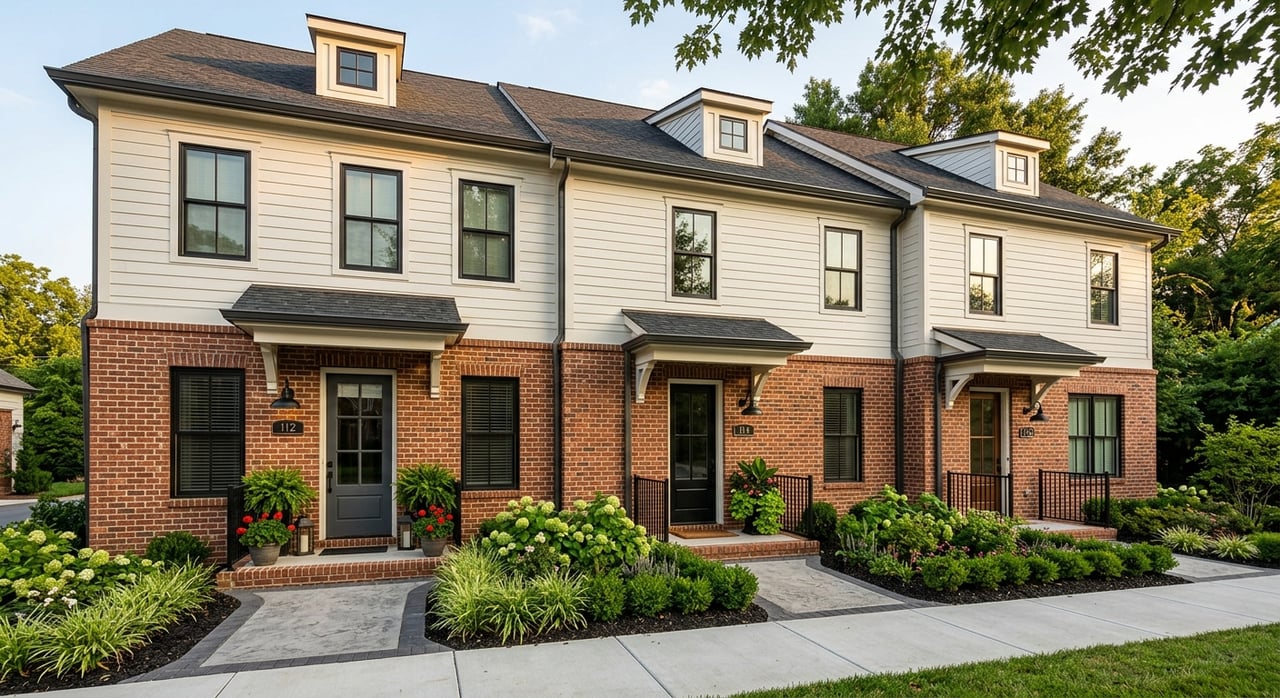
Townhomes in Medford are often a bit larger than condos. Current examples are mostly 2- to 3-bedroom homes with 1.5 to 2.5 bathrooms and roughly 1,080 to 1,755 square feet, with many listings clustering around 1,300 to 1,500 square feet.
Visible asking prices for current Medford townhomes commonly fall between about $185,000 and $399,900, though some larger homes may be priced higher. This gives buyers a wider range of options, from more budget-friendly attached homes to newer or larger layouts.
You may also see a mix of established and newer communities. Some current listings mention garages, multi-level floor plans, and even two primary suites, so it is important to verify the layout if you want single-level living or fewer stairs.
Condo vs townhome ownership in Oregon
This is one of the most important parts of the process. In Oregon, a condo is not just a home style. It is a legal form of ownership governed by the Oregon Condominium Act.
When you buy a condominium, you own your individual unit and also hold an undivided interest in the common elements. Those common elements can include things like foundations, framing, siding, roofs, stairways, utility services, landscaping, and parking areas. Every unit owner is automatically a member of the condominium association.
A townhome, by contrast, is a housing style and not one single ownership model. A Medford townhome may be part of a planned community, and the ownership and maintenance structure can vary based on the recorded declaration and HOA documents.
That means you should never assume that every townhome works the same way. Before you buy, it is important to confirm whether the property is legally a condominium or part of a planned community and review the governing documents carefully.
HOA fees and what they may cover
One of the biggest questions buyers ask is what the monthly HOA fee actually pays for. In Medford, the answer varies a lot from one community to another.
Current townhome listings show just how wide that range can be. One newer example lists a $48 monthly HOA, while another current example shows $374 per month. That difference usually reflects how much maintenance or how many shared services the association handles.
In current Medford attached-home listings, HOA dues may cover items such as:
- Landscaping
- Exterior paint
- Roofing
- Water
- Trash
- Exterior maintenance
- Exterior insurance
- Parking lot lighting
- Pool maintenance
Some communities also advertise amenities like a year-round heated pool. The key is to compare the fee with the services included, not just the dollar amount by itself.
Lower maintenance comes with tradeoffs
For many buyers, the appeal of a condo or townhome is convenience. If the association handles some exterior work or common-area upkeep, you may have fewer chores than you would with a detached house.
That said, convenience comes with shared rules and shared costs. Monthly dues, association policies, reserve funding, and maintenance responsibilities all affect your ownership experience.
You may also have less control over exterior changes than you would with a standalone house. If privacy, yard space, or full exterior freedom matters most to you, a detached home may still be the better fit.
Neighborhood patterns and daily lifestyle
Current attached-home listings in Medford are concentrated in several familiar in-town areas. Redfin highlights Southeast Medford, West Main, Rogue Valley, Southwest Medford, and North Medford as popular areas for both condos and townhomes.
It is also worth thinking about how you want to live day to day. Redfin describes Medford as minimally walkable, with a Walk Score of 38, so a lower-maintenance home does not automatically mean you can walk everywhere.
That makes location, parking, and access especially important. If your routine depends on quick drives to work, shopping, appointments, or recreation, those details should be part of your home search from the start.
Who condo or townhome living may suit
Attached housing can work well for several types of buyers. If you are buying your first home, a condo or townhome may offer a more affordable starting point than many detached homes in Medford.
If you are downsizing, you may appreciate a smaller floor plan and fewer exterior tasks. If you are relocating to the Rogue Valley, attached housing can also give you a chance to get settled in Medford with a simpler ownership setup.
The right fit depends on your priorities. If you value budget, convenience, and a manageable footprint, attached housing may check a lot of boxes.
What to review before making an offer
This is where careful due diligence matters most. Before you move forward, confirm whether the property is a condominium or a planned community, then review the declaration, bylaws, rules, budget, reserve study or maintenance plan, recent financial statements, and any written statement of unpaid assessments.
For condominiums, Oregon law requires annual financial statements and allows a prospective purchaser to obtain a written statement of unpaid assessments. Condominium associations must also keep records, and if annual assessments exceed $75,000, the financial statement must be reviewed by an Oregon-licensed CPA.
For planned communities, associations must also keep records, distribute annual financial statements, and provide a written statement of unpaid assessments for the benefit of a prospective purchaser. These details can help you understand both monthly costs and the financial health of the community.
Questions worth asking during your search
When you tour a Medford condo or townhome, it helps to go beyond the finishes and floor plan. A good set of questions can help you spot the difference between a home that simply looks good online and one that fits your long-term goals.
Consider asking:
- Is this legally a condo or part of a planned community?
- What does the HOA fee cover right now?
- Are there reserve funds or a maintenance plan in place?
- Are there any unpaid assessments tied to the property?
- Is the home single-level or multi-level?
- What parking and storage come with the unit?
- Which exterior components are owner responsibilities and which are association responsibilities?
These answers can affect your budget, your maintenance load, and your day-to-day comfort more than you might expect.
Final thoughts on Medford attached housing
Condo and townhome living in Medford can offer a practical path into homeownership or a simpler next move if you want less exterior upkeep. The local inventory is limited, pricing can vary widely, and ownership structure matters just as much as square footage.
If you take time to compare fees, review documents, and match the property to your lifestyle, you can shop with a lot more confidence. If you want local guidance on Medford condos, townhomes, or other homes across the Rogue Valley, Rachel White is here to help you make a clear, informed move.
FAQs
What is the difference between a condo and a townhome in Medford, Oregon?
- In Oregon, a condo is a legal form of ownership where you own your unit plus a shared interest in common elements, while a townhome is a housing style that may be part of a planned community or another ownership structure.
Are condos and townhomes usually cheaper than detached homes in Medford?
- Directionally, yes. Redfin’s current snapshot shows Medford’s median sale price for all homes at $414,702, compared with median listing prices of $220,000 for condos and $299,000 for townhomes.
What do HOA fees cover for Medford condos and townhomes?
- Coverage varies by community and may include landscaping, exterior maintenance, exterior paint, roofing, water, trash, exterior insurance, parking lot lighting, and pool maintenance.
Are Medford townhomes usually single-level homes?
- Not always. Current listings include multi-level layouts, and some mention two primary suites, so you should verify the floor plan if stair-free living is important to you.
What documents should you review before buying a Medford condo or townhome?
- You should review the declaration, bylaws, rules, budget, reserve study or maintenance plan, recent financial statements, and the written statement of unpaid assessments, while also confirming whether the property is a condo or part of a planned community.